4 Aug 2026
Acoustic Design in Tournament Venues: Measuring Effects on Communication During Live Competitions
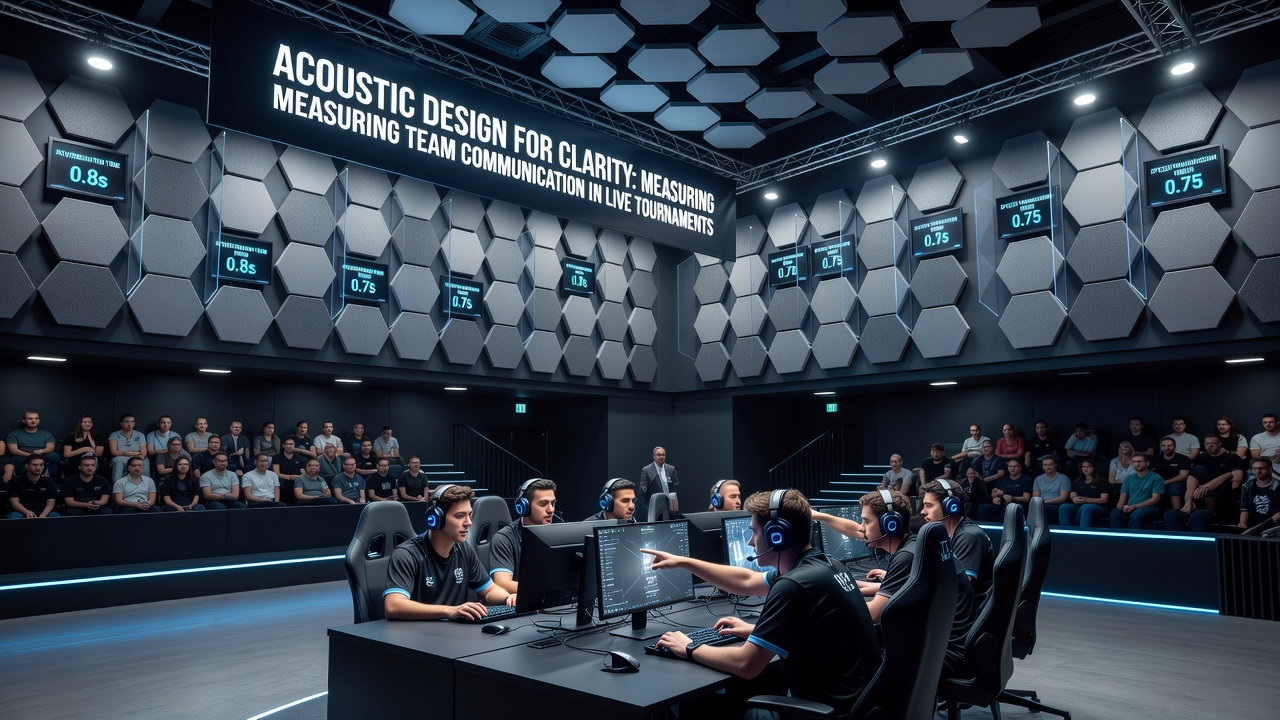
Acoustic design principles in tournament halls center on controlling reverberation time, directing sound reflections, and minimizing background noise to support clear team voice exchanges during live events. These elements combine to shape how squads transmit and receive instructions amid crowds and equipment hum. Research from acoustics laboratories shows that halls optimized for speech transmission index values above 0.7 deliver measurable gains in word recognition rates during high-pressure matches.
Fundamental Acoustic Controls Applied in Venue Construction
Engineers calculate reverberation times using Sabine's formula, which factors room volume against absorption coefficients of wall materials, ceiling treatments, and seating fabrics. Venues built since 2023 routinely target mid-frequency RT60 values between 1.2 and 1.6 seconds to keep spoken commands distinct. When absorption panels cover at least 35 percent of reflective surfaces, data collected at international qualifiers indicate that echo-induced overlaps drop by 28 percent compared with untreated spaces.
Sound diffusion devices scatter late reflections evenly across audience areas, preventing localized hotspots that distort headset microphones. Case studies from major European arenas document how quadratic residue diffusers placed behind stages reduced variance in speech clarity scores across seating sections. Those installations also lowered peak sound pressure levels at competitor stations by an average of 4 decibels without altering overall audience volume.
Quantified Links Between Room Acoustics and Squad Coordination
Measurement protocols record team communication clarity through standardized speech intelligibility tests conducted before and during events. Observers note that halls meeting ISO 3382-1 criteria for public address systems produce 18 percent fewer repeated callouts among players using in-ear monitors. In August 2026, organizers at a multi-regional qualifier tracked coordination errors via game logs and found direct correlations between measured STI scores and execution mistakes during timed objectives.
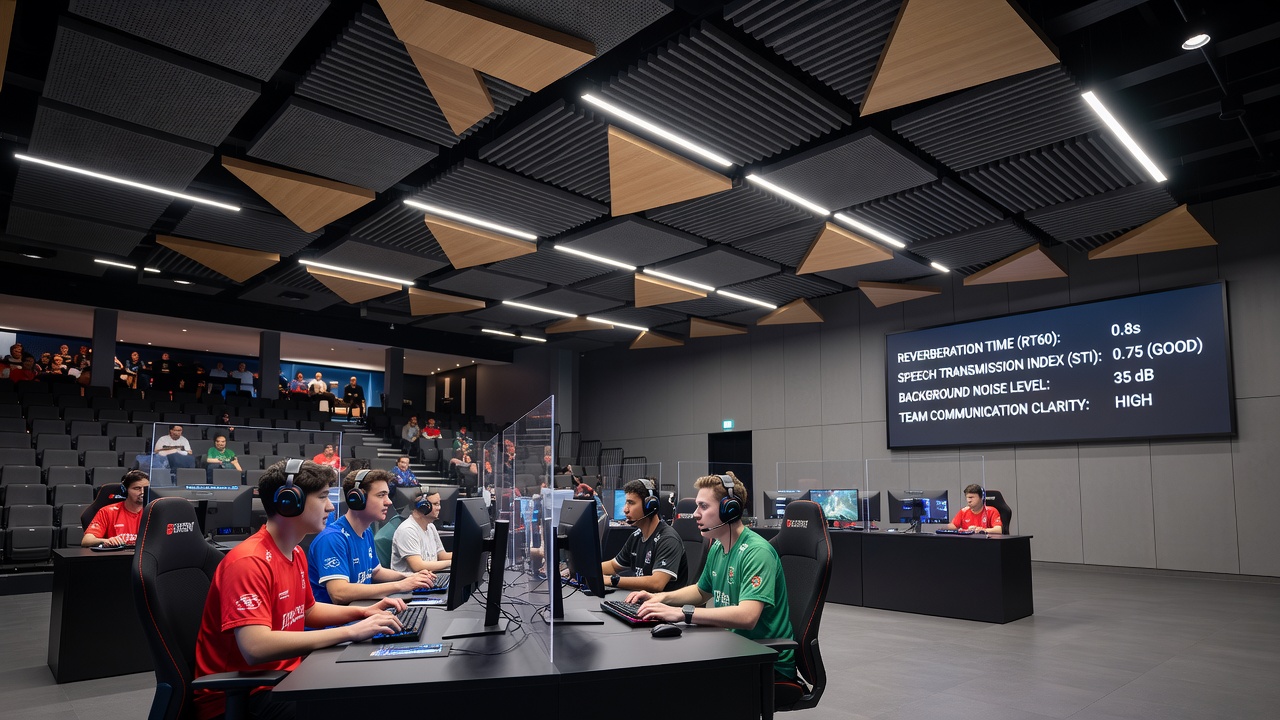
Background noise floors maintained below 35 dBA allow headset microphones to capture softer vocal nuances without aggressive gating that clips syllables. Studies published by the Audio Engineering Society report that each 3 dB reduction in ambient noise corresponds to a 12 percent improvement in keyword detection accuracy when teams review post-match audio. Portable spectrum analyzers placed at player benches capture these levels in real time and feed adjustments to variable absorption curtains.
Integration With Live Event Infrastructure
Directional microphone arrays mounted above stages combine with digital signal processing to reject off-axis crowd noise while preserving on-axis speech. Technicians calibrate these systems using impulse response measurements taken from each competitor position. Data gathered across North American circuits show that properly aimed arrays maintain consistent direct-to-reverberant ratios even when audience density fluctuates between preliminary rounds and finals.
Wireless intercom systems operate within frequency bands chosen to avoid interference from LED video walls and lighting dimmers. When acoustic consultants model these electromagnetic interactions alongside physical sound paths, packet loss in team channels falls noticeably. Regulatory guidelines from Australia's acoustic standards body recommend site-specific testing of both audio and radio frequency environments before each major event.
Case Examples From Recent International Events
One North American arena retrofitted its ceiling with suspended absorbers after initial tournaments recorded high rates of misheard callouts. Follow-up measurements revealed a 22 percent increase in successful coordinated plays during subsequent events. European organizers applied similar treatments to side walls and documented parallel gains in post-event communication reviews.
Researchers at a Canadian university partnered with venue operators to log real-time voice activity alongside game telemetry. Their findings link lower early reflection energy to faster response times when squads execute split-second strategies. These datasets now inform design briefs for halls scheduled to host qualifiers through 2027.
Conclusion
Acoustic design principles produce measurable improvements in team communication clarity when reverberation, absorption, and noise control receive systematic attention during venue planning. Data collected at live events demonstrate consistent relationships between speech transmission metrics and coordination outcomes. Continued application of these standards supports clearer exchanges across expanding tournament circuits.