28 Jul 2026
Advanced Thermal Controls Reshape Tactics During Lengthy Esports Championships
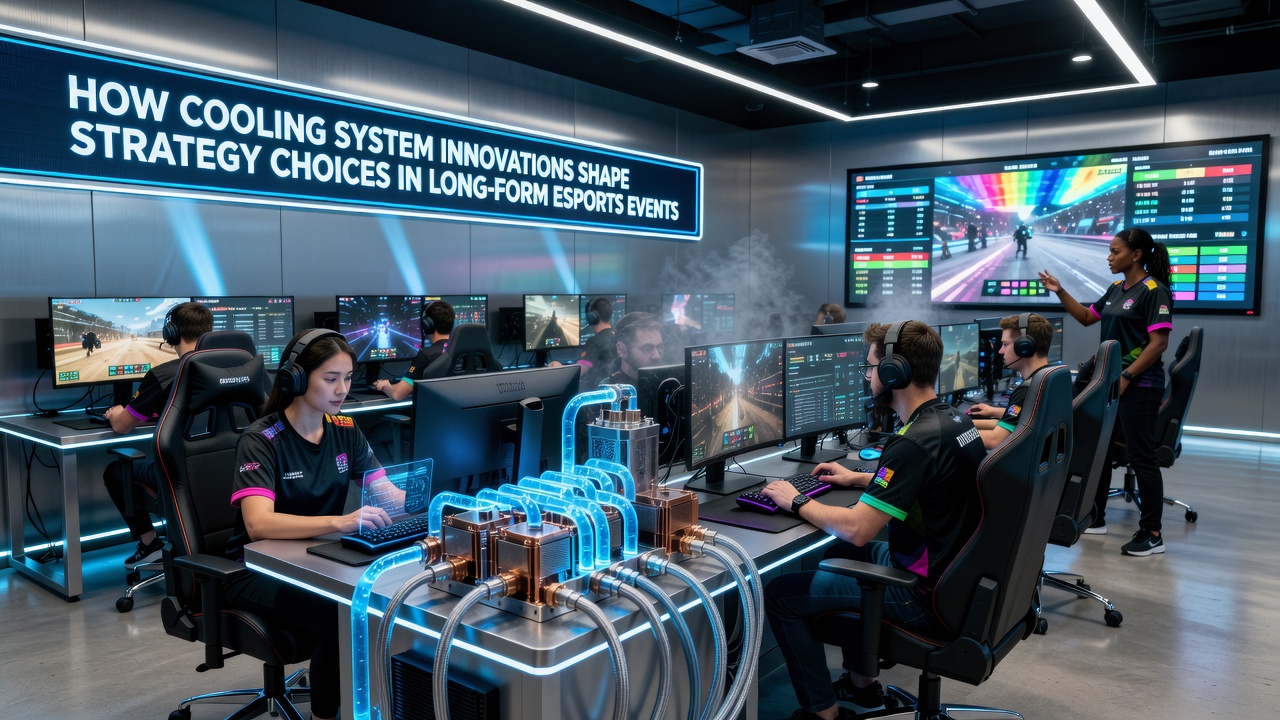
Long-form esports events stretch across multiple days and demand sustained performance from both players and hardware; cooling system innovations have begun altering how teams approach pacing, resource allocation, and risk assessment during these marathons. Data from regional circuits shows that devices equipped with improved heat dissipation maintain consistent clock speeds for longer intervals, allowing competitors to execute complex strategies without the throttling that once forced conservative play. Researchers at the University of Tokyo documented temperature thresholds in portable consoles during 2025 qualifiers, revealing that new vapor chamber designs reduced peak heat by up to 18 percent compared with earlier models.
Hardware Limits and Strategic Adaptation
Teams now calibrate their opening moves around expected thermal headroom instead of assuming uniform hardware behavior throughout a match. When cooling systems incorporate phase-change materials or active liquid loops, devices sustain higher frame rates even after six or seven consecutive hours of play; this stability lets squads commit to aggressive early aggression that would previously risk mid-event slowdowns. Observers at the 2026 Asia-Pacific qualifiers noted several squads shifting from defensive mid-game rotations to forward pressure once engineers confirmed sustained cooling margins above critical levels.
Studies conducted by the Canadian Institute for Digital Performance found that players using next-generation laptop coolers experienced fewer input lag spikes during overtime periods, which translated into measurable differences in win rates for resource-heavy titles. Those margins encouraged coaches to extend practice sessions focused on late-stage decision trees rather than early positioning drills alone.
Regional Infrastructure and Device Choices
Venue power delivery and ambient temperatures interact directly with onboard cooling efficiency. Venues in warmer climates have seen organizers prioritize external cooling docks or chilled airflow systems so that competitors can maintain peak device output without relying solely on internal fans. This infrastructure support has prompted some organizations to favor lighter portable rigs over bulkier desktop towers during travel-heavy circuits, because advanced internal cooling compensates for the reduced surface area.
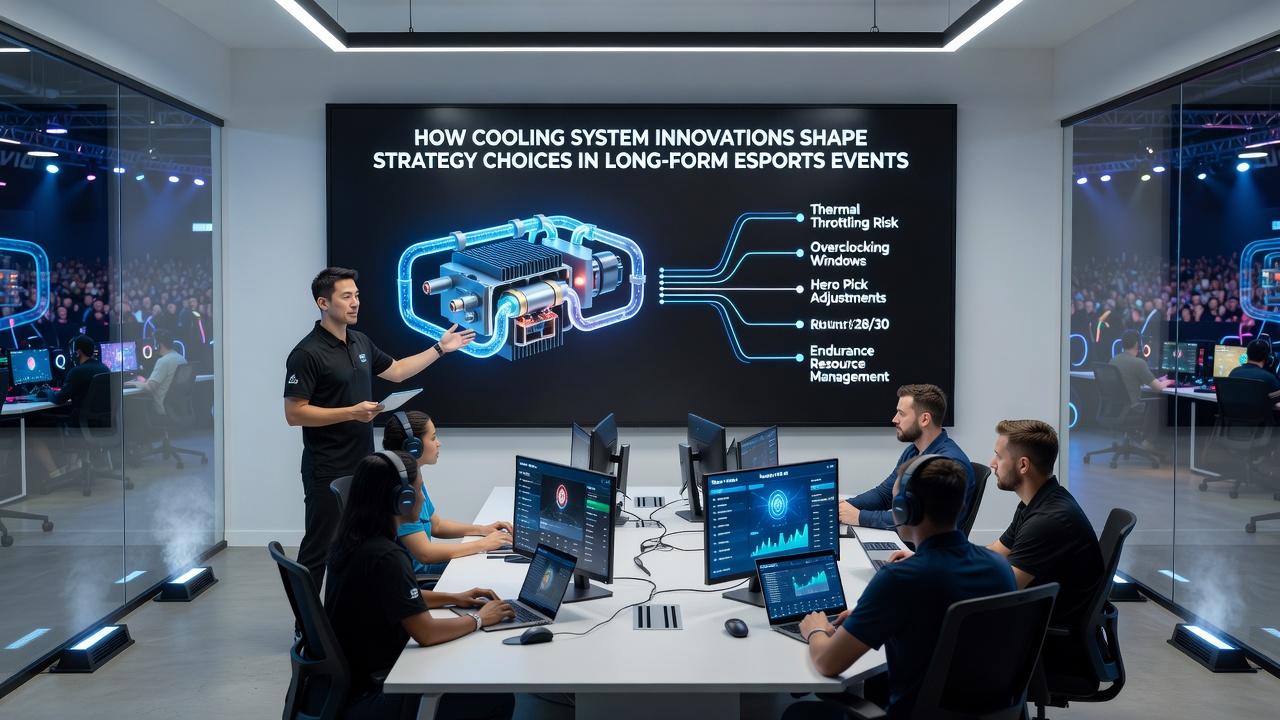
Figures released by the European Esports Technology Consortium in early 2026 indicate that events held above 28 degrees Celsius ambient saw a 12 percent increase in hardware-related timeouts when teams used older cooling stacks. Squads responded by incorporating real-time temperature telemetry into their coaching interfaces, enabling mid-match adjustments to graphics settings or background processes that preserve cooling capacity for critical moments.
Data-Driven Training Adjustments
Training regimens now incorporate thermal load simulations so athletes acclimate to the physical sensation of warmer devices while practicing prolonged focus. Performance analysts track correlations between heat buildup and reaction time degradation, then feed those metrics back into strategy planning software. One documented case from the North American summer circuit showed a team revising their character selection priorities after tests revealed that certain high-ability combinations generated excess heat that compromised late-round consistency.
Engineers continue refining fan curves and heat pipe layouts to push the boundary where performance degradation begins. These refinements allow longer uninterrupted play windows, which in turn supports formats that incorporate more map or round variations without mandatory hardware swaps. Tournament organizers have started factoring cooling specifications into equipment approval lists, ensuring parity across participants while still rewarding teams that optimize their thermal management setups.
Conclusion
Cooling system advances have therefore become another variable in the strategic equation for long-form esports events, influencing everything from opening tactics to endurance-focused practice schedules. As hardware continues to evolve, data collection on thermal performance during actual competition will likely expand, giving analysts finer tools to predict how device behavior shapes outcomes across extended schedules.