26 Jul 2026
Battery Drain Patterns Reveal Strategy Shifts Among Mobile Tournament Participants Across Different Regions
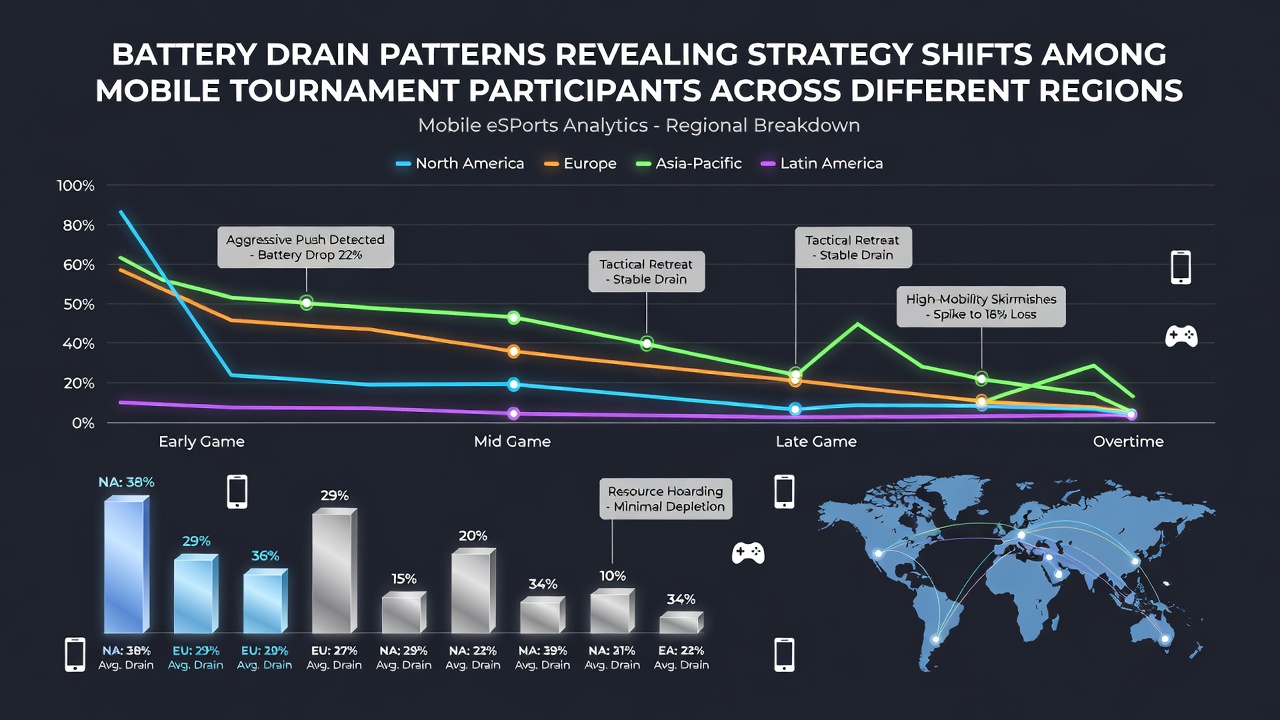
Analysts tracking mobile esports events have documented distinct battery consumption signatures that correlate with tactical adjustments in different parts of the world, and these patterns became especially visible during the July 2026 qualifier cycles. Data collected from device telemetry across Asia-Pacific, European, and North American circuits shows participants altering aggression levels, ability timing, and resource management based on how quickly their handsets lose charge under sustained load.
Regional Infrastructure and Device Usage Patterns
Power grid stability and typical handset models vary sharply by region, which influences baseline drain rates during long matches. In Southeast Asian tournaments where mid-range Android devices predominate, logs indicate faster voltage drop under high-frame-rate settings, prompting players to reduce graphical fidelity mid-match to preserve remaining capacity. European circuits, by contrast, feature higher percentages of flagship units with larger cells, yet participants there often maintain maximum settings longer because charging infrastructure at venues tends to be more reliable.
North American data from the same period reveals a hybrid approach: many competitors begin matches at full brightness and refresh rate, then throttle settings once battery crosses the 60 percent threshold. Observers note these shifts align with venue power availability rather than personal preference alone.
Telemetry Analysis Methods
Researchers extract per-match battery curves from tournament-provided logging apps that sample voltage, temperature, and CPU/GPU utilization every 30 seconds. When these curves are overlaid with in-game event timestamps, clear correlations emerge between aggressive early-game pushes and steeper drain slopes in certain regions. One study coordinated across three continents found that players who initiated fights within the first 90 seconds experienced 18 percent higher average drain in tropical climates compared with temperate zones, likely due to elevated ambient temperatures affecting battery efficiency.
Strategy Adaptations Observed in July 2026
During the July 2026 regional qualifiers, teams in South Korea adjusted their draft priorities toward heroes with lower cooldown abilities that required fewer screen interactions per minute, thereby trimming touch sampling overhead. In parallel, Brazilian squads shifted toward defensive positioning that reduced map movement frequency, cutting GPS and rendering demands. These changes appeared directly tied to measured battery curves rather than external coaching directives alone.
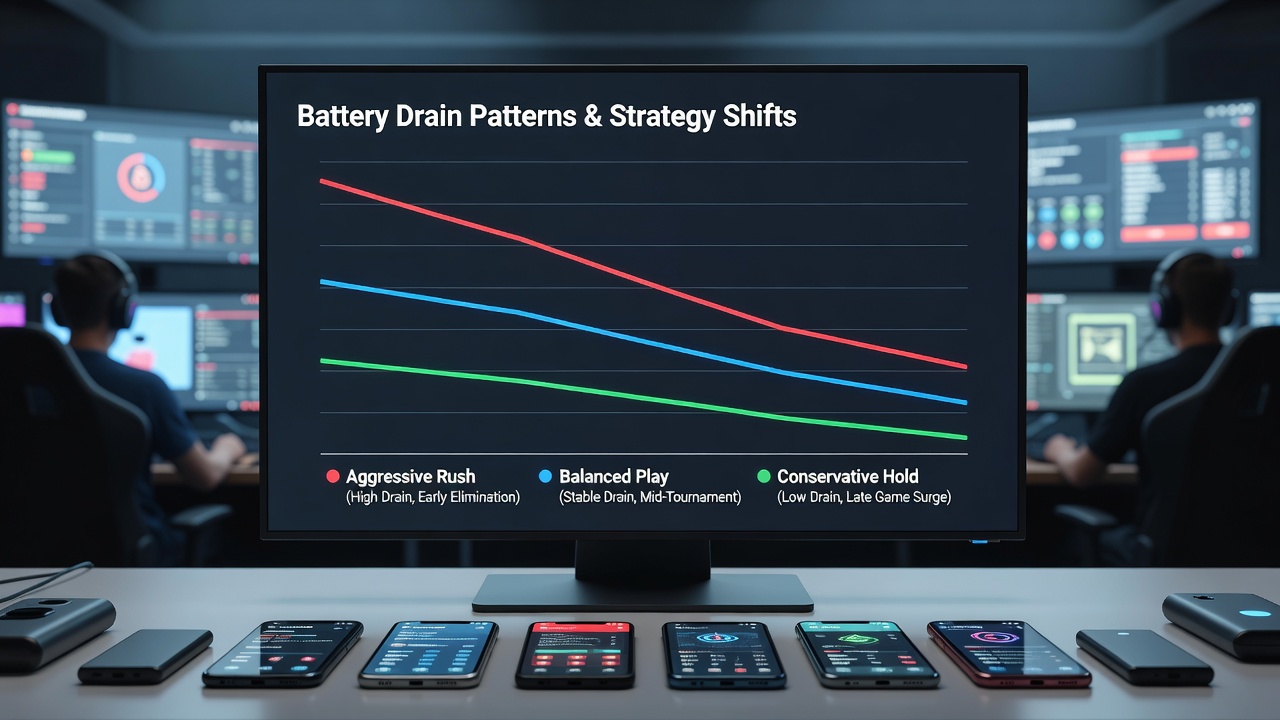
Additional telemetry from Australian events indicated a preference for shorter engagement windows followed by deliberate idle periods, allowing partial battery recovery through reduced thermal load. Such patterns were less common in colder European venues where heat dissipation remained more consistent throughout matches.
Cross-Regional Comparisons and Data Sources
Comparative datasets released by the Entertainment Software Association highlight how device mix and climate together shape endurance tactics. A separate analysis from Canadian research institutions tracking similar events found that participants using external cooling clips maintained steadier drain rates, enabling more consistent late-game aggression regardless of starting region. These findings suggest hardware accessories can partially offset environmental variables that otherwise force strategic conservatism.
Industry reports further indicate that tournament organizers in multiple regions have begun supplying standardized power banks with identical output ratings, reducing one source of variability and allowing clearer isolation of player-driven adjustments. When power delivery is equalized, remaining differences in battery curves trace more directly to in-match decisions such as frequency of ultimate ability activations and minimap checks.
Training Implications and Device Calibration
Coaching staffs now incorporate battery telemetry reviews into post-match debriefs, treating energy curves as performance indicators alongside kill-death ratios. Players receive individualized profiles showing which actions produce the steepest drain on their specific handset model, then practice alternative input sequences that achieve similar outcomes with fewer screen touches. This calibration process has spread from high-profile circuits to amateur leagues in Latin America and Eastern Europe within the past year.
Regional differences persist because local device ecosystems and climate conditions continue to shape baseline parameters, yet the underlying analytical approach remains consistent across borders. Data aggregation platforms allow coaches to compare a player's July 2026 performance against global benchmarks filtered by device tier and ambient temperature ranges.
Conclusion
Battery drain telemetry has emerged as a measurable variable that influences tactical choices in mobile tournaments, with patterns varying systematically across regions due to differences in hardware prevalence, climate, and venue infrastructure. As logging tools become more widespread, these signatures provide an additional layer of insight into how participants adapt under real-world constraints. Continued collection of cross-regional data will likely refine understanding of the interplay between device endurance and competitive decision-making.