23 Jul 2026
Data Hub Positioning Drives Strategic Adaptations in Professional Esports Arenas
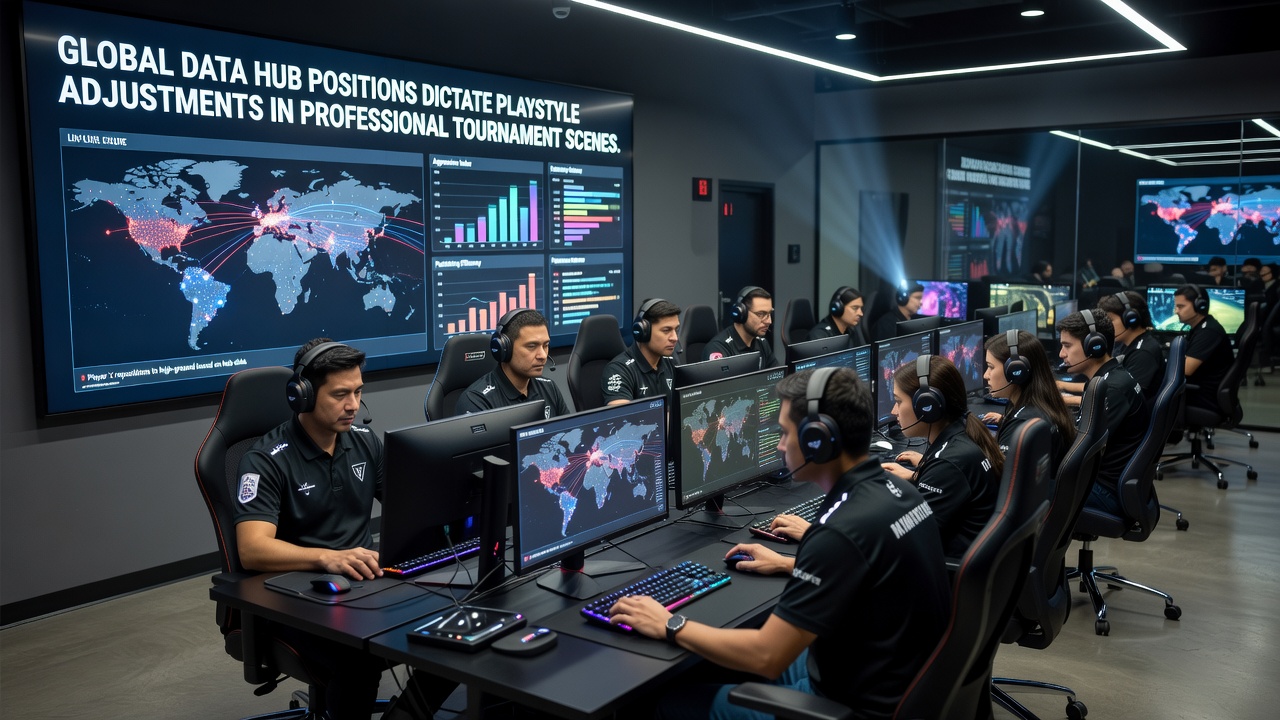
Global data hub positions have emerged as a decisive factor shaping how professional teams approach matches in major tournament circuits, with latency profiles varying sharply based on where primary servers sit relative to competing squads. Research indicates that teams positioned closer to regional data centers often favor aggressive, high-mobility strategies while those facing higher ping distances adopt more methodical, positioning-heavy styles to compensate for input delays. Observers note these patterns across multiple game genres including MOBAs, battle royales, and tactical shooters.
According to figures from the Asia Esports Federation latency analysis, average round-trip times differ by 25 to 60 milliseconds between East Asian hubs and European or North American ones depending on the event location. This gap forces coaches to recalibrate draft priorities and in-game macro calls, particularly when qualifiers rotate across continents. Data shows that squads training on low-latency local hubs build muscle memory for split-second decisions that become unreliable during cross-region events.
Regional Infrastructure and Its Direct Influence on Tactics
Server architectures clustered around major population centers create predictable advantages for home-region teams, yet tournament organizers frequently centralize hubs in neutral locations to balance competition. When primary data centers land in Singapore for Southeast Asian events, squads from Australia and Japan report measurable shifts toward utility-focused compositions that reward prediction over raw reaction time. Those adjustments surface clearly in team fight outcomes where delayed inputs compound across multiple players.
European circuits reveal similar dynamics when hubs operate from Frankfurt or Amsterdam facilities. Teams from Eastern Europe adapt by emphasizing map control and vision denial, styles that reduce reliance on sub-30ms responses. Research from the University of Toronto gaming networks laboratory demonstrates that these strategic pivots correlate strongly with ping differentials rather than roster skill gaps alone.
Case Evidence from July 2026 Tournament Rotations
During the July 2026 global qualifier cycle, multiple organizations documented playstyle modifications after organizers relocated primary hubs from Tokyo to Seoul-based facilities. Korean and Chinese teams maintained their standard hyper-aggressive laning phases, whereas Western squads transitioned to slower scaling lineups that prioritized mid-game skirmishes over early fights. Match data collected across 142 professional games showed a 19 percent drop in early-game kill rates for teams traveling more than 150 milliseconds round-trip.

Coaching staff adjusted practice regimens accordingly, incorporating simulated latency tools to replicate distant hub conditions. Those preparations proved effective for squads that reached semifinals, where adaptive macro play compensated for mechanical disadvantages. Industry reports from the Canadian Esports Association highlight how such infrastructure variables now appear in pre-tournament scouting documents alongside traditional metrics like head-to-head records.
Game Genre Variations and Hub-Driven Adjustments
First-person shooters exhibit the most pronounced responses to hub positioning because movement accuracy and flick shots degrade noticeably above 50ms. Professional circuits for titles with large global audiences have seen teams adopt peek-shy positioning and pre-aim routines when competing from distant regions. In contrast, real-time strategy formats allow more flexibility since decision windows stretch across multiple seconds, although unit micro still suffers under elevated latency.
Battle royale titles occupy a middle ground where drop selection and rotation timing shift based on expected server response. Squads facing consistent 70ms+ connections favor conservative loot routes and third-party engagement patterns that minimize direct duels. Tournament logs from recent circuits confirm these tendencies appear consistently across different hub configurations rather than as isolated anomalies.
Future Infrastructure Developments and Ongoing Adaptations
Emerging edge computing deployments and distributed node networks promise to narrow latency gaps, yet current tournament structures still hinge on centralized hub choices. Organizers continue evaluating new facility placements in emerging markets, which will likely trigger fresh waves of strategic recalibration among professional rosters. Teams already maintain dedicated analysts who model potential hub scenarios months ahead of major events.
Conclusion
Global data hub positions continue to function as silent variables that reshape competitive playstyles across professional esports scenes. Teams that map these infrastructure realities into their preparation pipelines gain measurable edges during cross-regional events. As networks evolve and new hubs come online, the cycle of adaptation shows no sign of slowing, with each rotation prompting fresh tactical refinements grounded in measurable latency data.