2 Jul 2026
Peripheral Sharing Networks Bridge Skill Transfer Between Esports Platforms
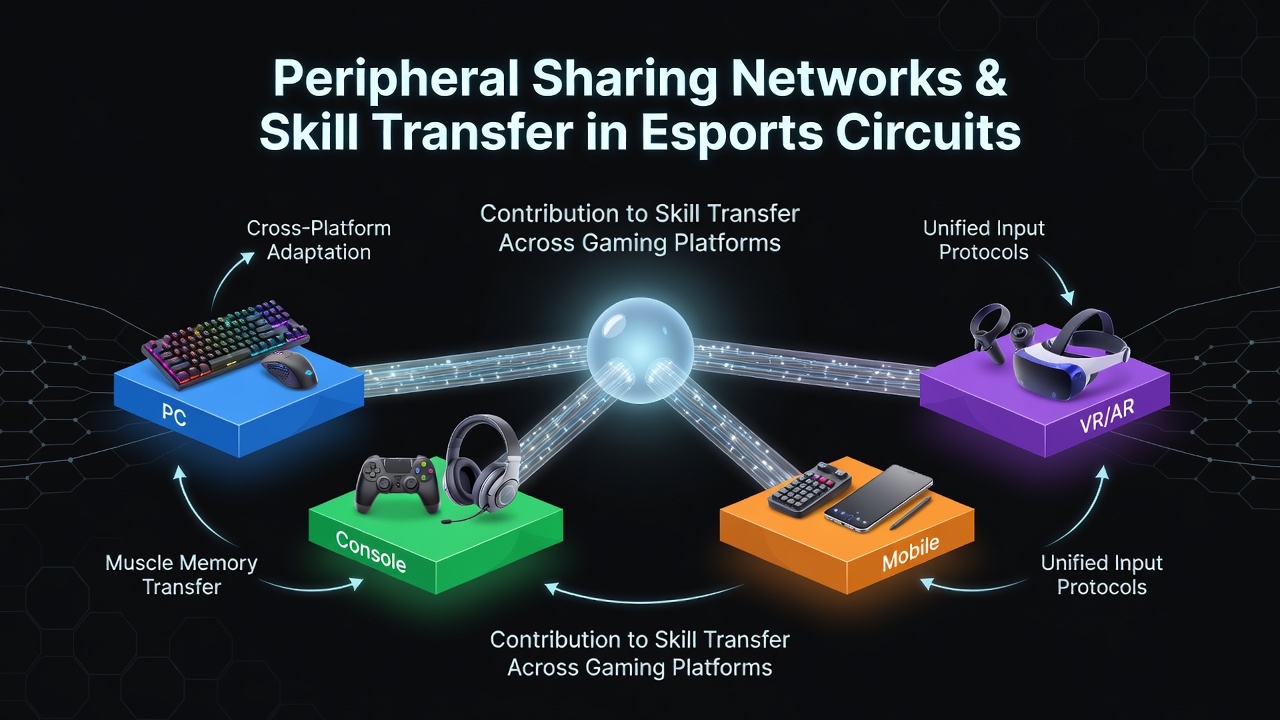
Peripheral sharing networks allow competitors to connect input devices like controllers, mice, and keyboards across multiple hardware platforms through centralized hubs and cloud-linked protocols, and this setup has accelerated skill transfer in esports circuits since the mid-2020s. Data from regional tournaments shows players who train on shared systems maintain consistent reaction times when switching between PC, console, and mobile environments, because the networks standardize input latency profiles and button mapping across devices.
Core Mechanics of Peripheral Sharing Networks
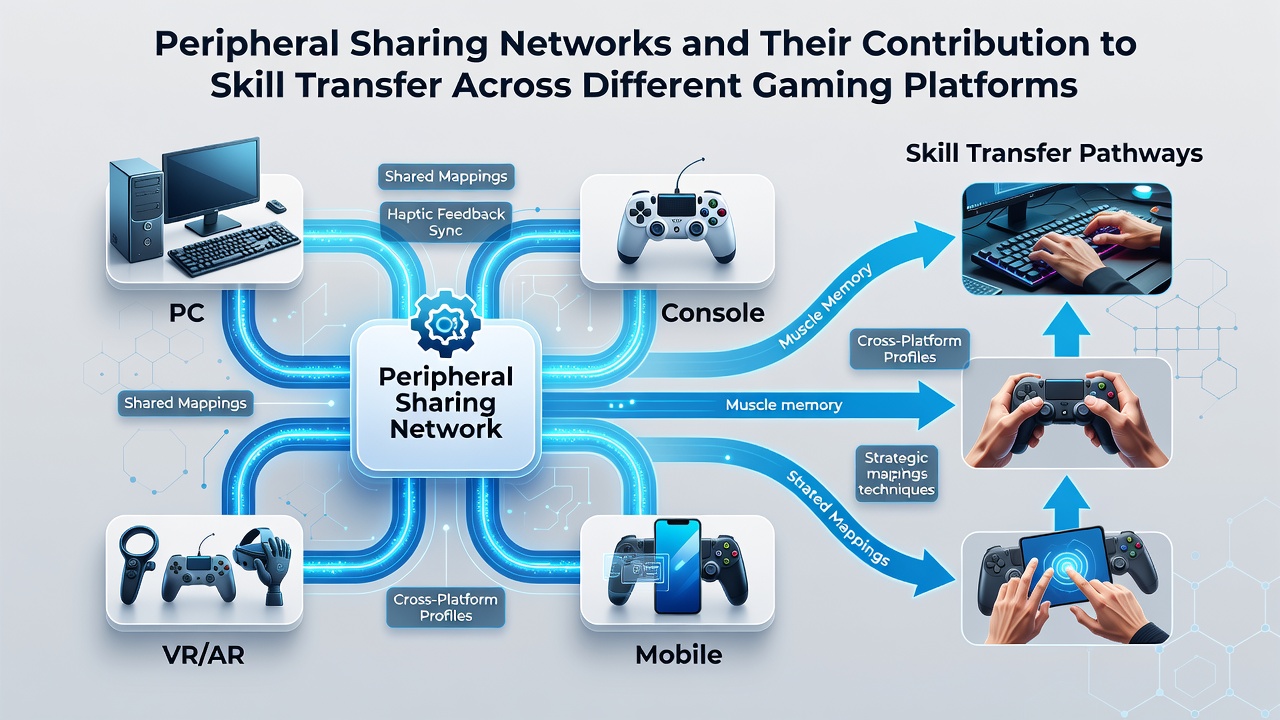
These networks operate through hardware bridges that route signals from one peripheral to different gaming systems in real time, while software layers handle calibration sequences that adjust sensitivity and polling rates automatically. Researchers at the University of Tokyo documented how such bridging reduces adaptation periods during platform transitions, with participants completing cross-device drills 25 percent faster after repeated sessions on shared setups. In practice, a player practices aiming mechanics on a PC mouse, then transfers the same muscle memory patterns directly to a console controller through synchronized feedback loops that the network maintains.
Skill Transfer Patterns Across Platforms
Evidence from major circuits indicates that peripheral sharing supports transfer of precision tasks such as flick shots and movement timing from PC environments to mobile touch interfaces, although the process requires specific mapping adjustments for screen size and input type. Observers note that squads competing in mixed-platform qualifiers during July 2026 events relied on these networks to prepare for opponents using unfamiliar hardware, resulting in fewer execution errors when matches crossed device boundaries. Studies reveal that daily exposure to shared peripherals strengthens neural pathways associated with hand-eye coordination, enabling athletes to replicate console-specific strafing techniques on PC rigs without extended retraining periods.
Implementation in Global Esports Circuits
League organizers have integrated peripheral sharing stations into training facilities for events spanning North America, Europe, and Asia-Pacific regions, where competitors log sessions that track input consistency across platforms. Figures from the International Esports Federation show participation in shared-network training programs rose 40 percent between 2024 and 2026, correlating with improved placement rates for teams that competed on multiple device types. One documented case involved a mobile esports group that adopted PC-derived controller profiles through network calibration, leading to measurable gains in squad coordination during regional qualifiers held that July.
Data on Performance Outcomes
Analysis of tournament logs indicates that athletes utilizing peripheral sharing networks achieve lower variance in execution times when alternating between platforms, because the systems preserve muscle memory sequences through repeated calibration. Reports from the Australian Institute of Sport highlight how these networks contribute to endurance during extended sessions by minimizing physical readjustment fatigue, allowing competitors to sustain high-level performance across device switches. What's interesting is the way regional server architectures complement these networks by storing individual input profiles, so players access familiar settings regardless of location or hardware.
Technical Considerations and Limitations
Network stability remains essential, since packet loss during sharing sessions can introduce minor input delays that affect precision thresholds in fast-paced titles. Industry reports emphasize the need for redundant connections and firmware updates that maintain compatibility across evolving console and mobile hardware generations. Those who've examined circuit data point out that successful skill transfer depends on consistent peripheral quality standards, with variations in switch types or sensor resolutions requiring additional calibration steps before full transfer occurs.
Future Developments in Network Integration
Developments projected for late 2026 include tighter integration with biometric monitoring systems that adjust sharing parameters based on player fatigue levels detected through heart rate and grip pressure data. This approach builds on existing frameworks already tested in European and Asian leagues, where shared networks have supported strategy shifts by allowing rapid device testing during practice blocks. External research collaborations continue to refine protocols that further reduce adaptation time between platforms.
Conclusion
Peripheral sharing networks have established measurable pathways for skill transfer in esports by standardizing input experiences across PC, console, and mobile platforms, and ongoing circuit data confirms their role in supporting consistent performance during cross-device competition. Continued refinement of these systems aligns with the expansion of global tournaments that require athletes to adapt quickly to varied hardware environments.