21 Jul 2026
Peripheral Tweaks That Reshape Team Dynamics During Extended Online Tournament Sessions
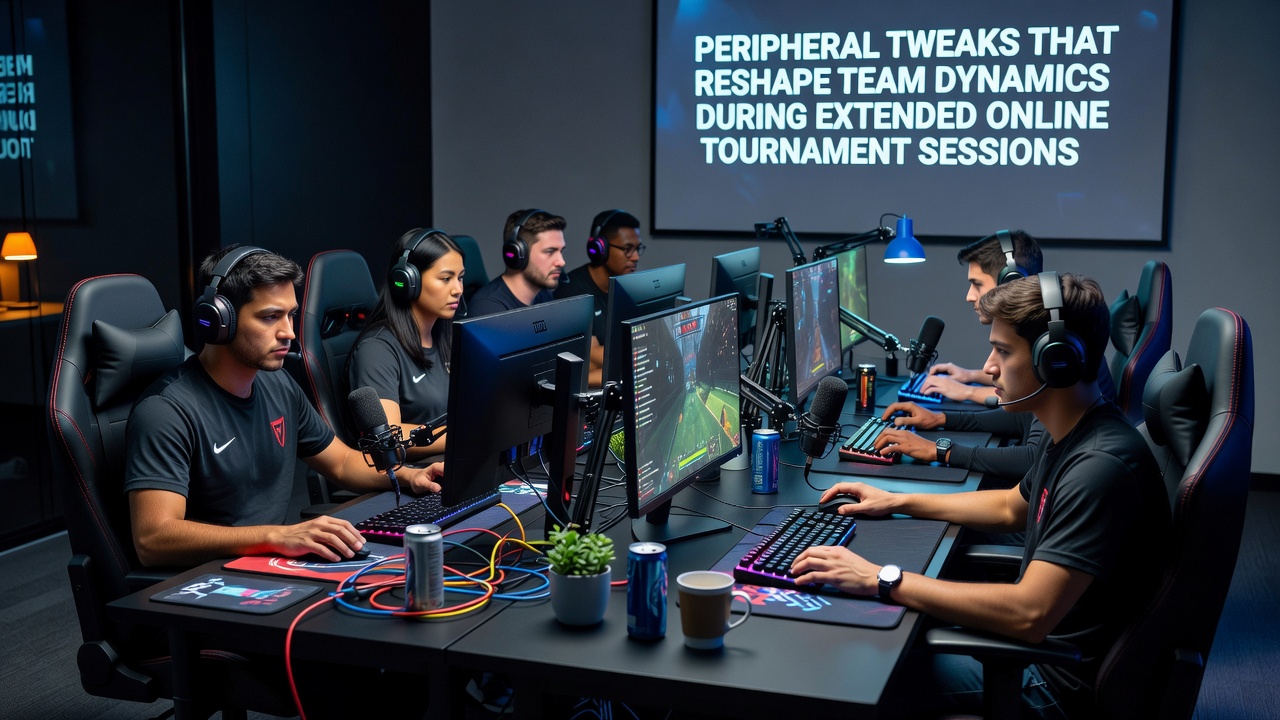
Teams competing in extended online tournaments often discover that small changes to input devices produce measurable shifts in coordination, and data collected across multiple events shows how these adjustments alter communication patterns and role distribution within squads. Observers note that modifications to mouse sensitivity, controller dead zones, and keyboard layouts influence the speed at which players relay positional information during matches that stretch beyond four hours, while researchers tracking performance metrics in July 2026 recorded consistent patterns where optimized grips reduced response delays by measurable margins in coordinated play.
Studies compiled by the Entertainment Software Association reveal that squads implementing uniform peripheral calibration sequences experienced fewer instances of misaligned timing calls, because standardized input profiles allowed members to anticipate each other's movement patterns without verbal confirmation in every scenario. Those who've examined tournament logs point out that players who recalibrated polling rates on their mice before long sessions maintained steadier cursor control, which in turn supported tighter formation holding when teams executed multi-step strategies under fatigue.
Input Calibration and Shared Decision Speed
Calibration routines applied to gaming peripherals affect how quickly squads process in-game cues, and figures from regional league analyses indicate that teams using synchronized sensitivity curves executed flank maneuvers with reduced overlap errors during extended qualifiers. Experts tracking input latency across devices found that minor DPI adjustments, when shared among all members before a session began, created a common reference frame that streamlined callouts about enemy positioning. What's interesting is how these tweaks compound over time, as squads that maintained consistent hardware profiles across multiple days reported steadier coordination even when individual fatigue set in.
One documented case from a 2026 summer circuit showed a squad that standardized key bindings for ability activations, which allowed the support player to predict the carry's engagement windows without additional voice traffic. Research indicates such alignment decreases cognitive load during later stages of matches, because players no longer needed to adjust mental models for varying input responses.
Ergonomic Modifications and Role Rotation Patterns
Teams incorporating wrist rests and adjustable mouse weights observed changes in how roles rotated during prolonged events, since reduced physical strain permitted members to maintain focus on secondary responsibilities like map awareness. Data from performance monitoring platforms shows that squads applying these modifications sustained higher rates of accurate pings and directional updates when sessions extended past the five-hour mark. Observers have noted that players using contoured grips on controllers reported less hand fatigue, enabling them to stay engaged in rapid communication exchanges that define late-stage comebacks.
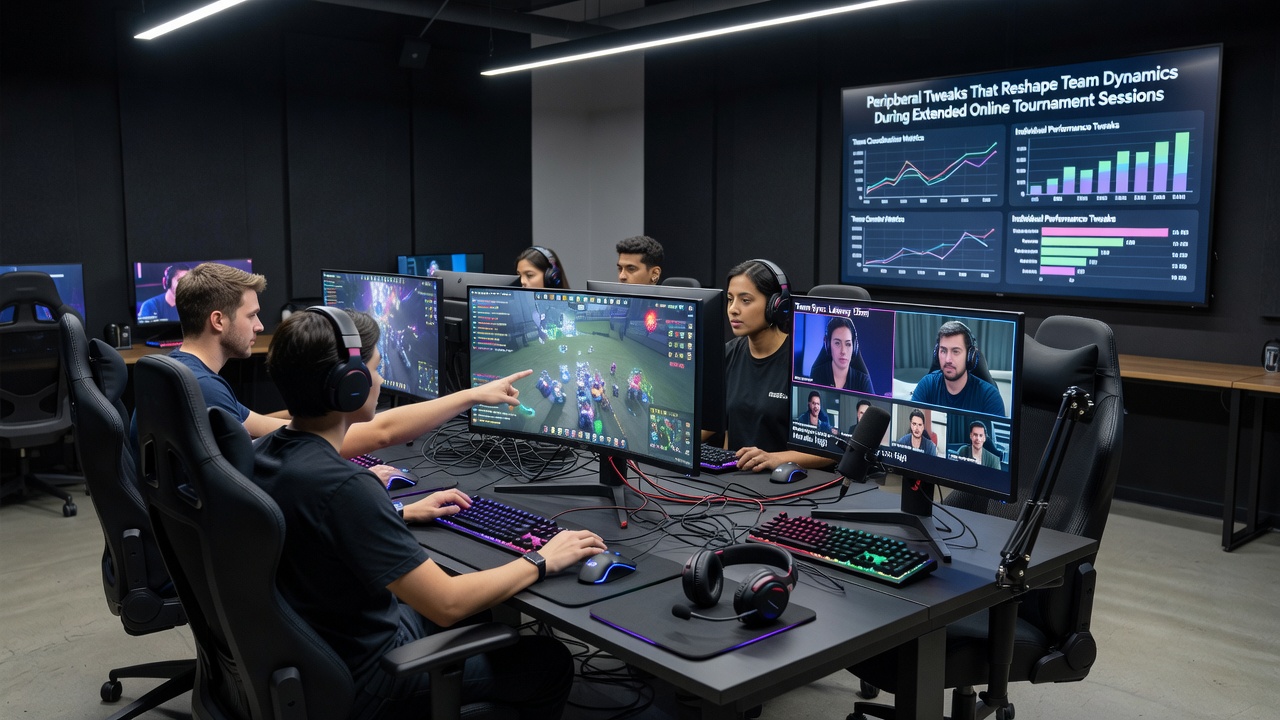
Industry reports compiled by the European Games Developer Federation highlight how teams that shared ergonomic setups across members experienced more fluid handoffs between primary and secondary objectives. Those adjustments altered the division of labor because individuals could sustain precise inputs without frequent breaks, which preserved the squad's overall tempo during extended brackets. But here's the thing: these benefits only emerged when all participants adopted comparable configurations rather than isolated tweaks.
Polling Rate Alignment and Squad Anticipation
Alignment of polling rates across team peripherals correlates with improved anticipation during coordinated pushes, according to telemetry gathered from multiple online circuits. Players operating at matching rates produced input streams that teammates could more easily read through visual cues alone, reducing the need for constant verbal confirmation. Research from academic groups studying human-computer interaction in competitive settings shows this consistency supports quicker adaptation when plans shift mid-engagement.
Teams that synchronized these rates before July 2026 events demonstrated fewer instances of staggered movement execution, because each member operated within a predictable input window that the group had already internalized. Data indicates the effect becomes more pronounced as session length increases, since uniform device behavior compensates for declining individual reaction times.
Conclusion
Peripheral adjustments continue to influence team dynamics in measurable ways during extended online tournaments, as calibration sequences, ergonomic additions, and rate alignments reshape communication efficiency and role execution. Evidence gathered across events demonstrates that shared hardware profiles support sustained coordination when fatigue accumulates, while divergent setups can introduce friction in timing-dependent strategies. Those monitoring future circuits will likely track how evolving device standards further integrate with squad-level preparation routines.