25 Jun 2026
Regional Power Infrastructure Influences on Mobile Tournament Player Endurance
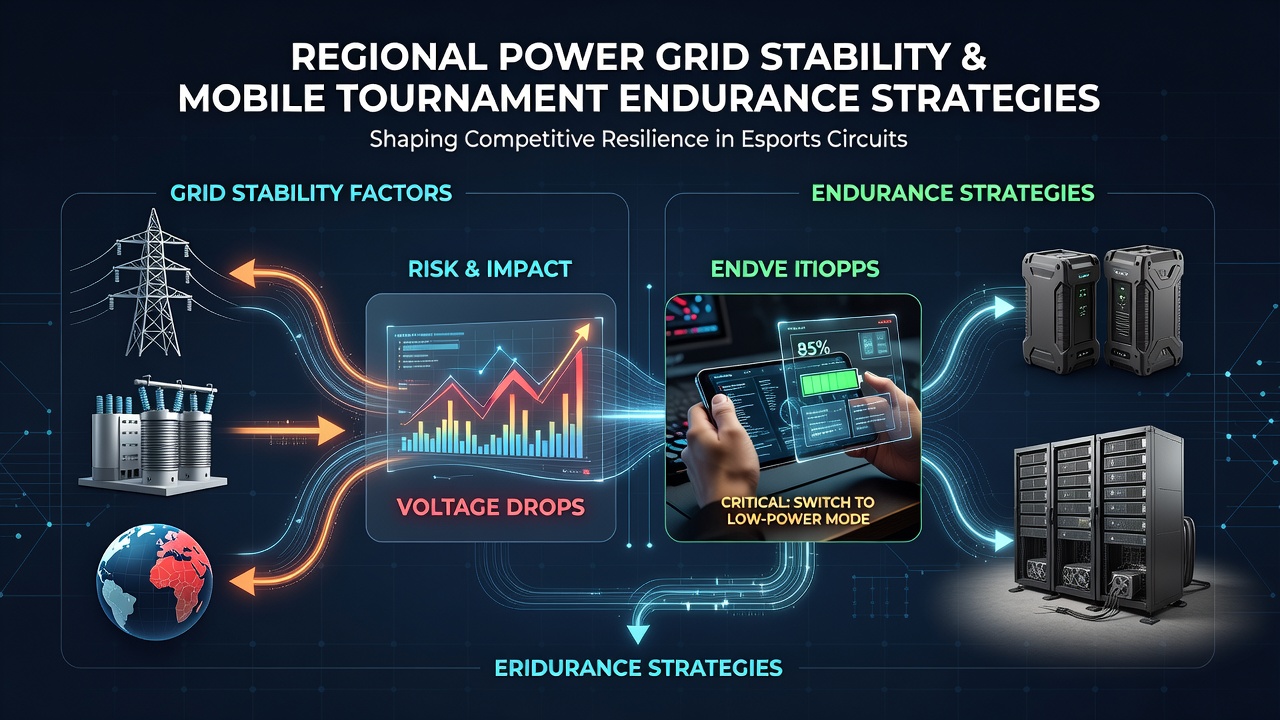
Power grid reliability varies widely across continents and this variation directly affects how competitors in mobile esports circuits prepare for long-duration events, with data from multiple regions showing distinct patterns in device management and session planning. Observers note that areas experiencing frequent voltage fluctuations or scheduled load shedding force participants to adopt layered backup systems while regions with consistent supply allow focus on performance optimization rather than power conservation. According to reports from the Australian Energy Regulator, grid stability metrics in parts of Oceania have remained above 99 percent uptime in recent years whereas certain zones in South Asia report averages closer to 85 percent during peak demand periods.
Grid Stability Metrics Across Key Tournament Regions
Studies compiled by the International Energy Agency reveal that tournament organizers in North America and Western Europe schedule qualifying rounds around known maintenance windows because even brief interruptions can reset connection streaks and drain backup batteries faster than anticipated. In contrast competitors in parts of Africa and Southeast Asia routinely incorporate solar-assisted chargers and high-capacity power banks into their kits because local utilities publish rolling outage calendars that intersect directly with evening tournament blocks. Those who've tracked participation logs across circuits point out that players in high-stability zones spend 30 percent less time on peripheral power checks during matches yet still maintain comparable win rates to peers operating under tighter constraints.
Device Configuration Adjustments in Unstable Areas
Research indicates that mobile athletes adjust screen brightness thresholds, disable background processes, and pre-download match assets during stable overnight hours when grid frequency normalizes. One documented approach in Brazilian regional leagues involves pairing devices with external battery arrays rated for at least four hours of continuous high-performance draw because local distribution networks experience brief brownouts several times per week. Figures from the Canadian Energy Regulator show that provinces with robust hydroelectric infrastructure maintain steadier voltages allowing players to rely on standard wall charging between rounds rather than constant monitoring of remaining capacity.
Strategic Scheduling and Regional Outage Patterns
What's interesting is how organizers have begun publishing power reliability forecasts alongside bracket releases so that competitors can align warm-up routines with expected grid conditions. Data collected through 2025 demonstrates that events held in June 2026 in parts of India incorporated mandatory thirty-minute buffer periods between sets to accommodate potential load shedding while European qualifiers maintained continuous blocks because their grids rarely dip below acceptable thresholds. Players adapt by rotating between multiple charged devices or using vehicle-based inverters when traveling between venues located in different reliability zones.
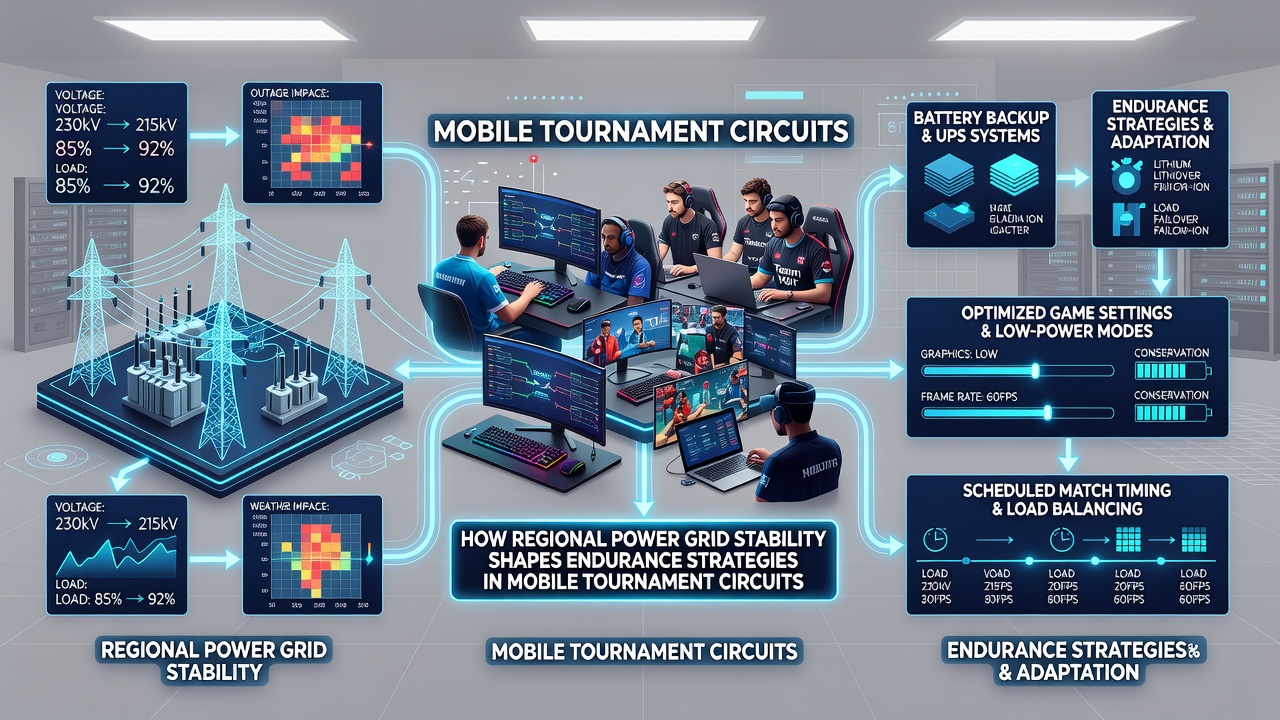
Those tracking qualification statistics note that endurance strategies now include contingency mapping of local substation schedules and coordination with venue staff to secure dedicated circuits where available. In regions where utilities publish advance notices of maintenance the most successful participants pre-charge all peripherals and test failover sequences days ahead rather than reacting during active competition.
Emerging Technologies and Infrastructure Upgrades
Industry reports highlight that newer mobile chipsets incorporate more efficient power gating which reduces overall draw during extended sessions and this change proves especially valuable in areas where grid voltage sags occur without full outages. Observers have documented cases where competitors in East African circuits integrated portable fuel cells for multi-day events because regional grids undergo seasonal strain during dry periods when hydroelectric output declines. Meanwhile North American circuits continue shifting toward venue-provided conditioned power lines that eliminate variability at the hardware level allowing focus to remain on reaction timing and team coordination.
Academic analyses from university research groups in the European Union further indicate that predictive modeling of grid events combined with real-time device telemetry enables participants to switch between power profiles automatically without manual intervention. These systems prove less critical in Australia where consistent supply lets athletes maintain higher screen resolutions throughout matches yet remain essential tools for circuits operating across multiple reliability tiers.
Conclusion
Regional differences in electrical infrastructure continue shaping the preparation layers that mobile tournament participants build into their routines with measurable effects on session length planning and hardware selection. Data from regulatory bodies across continents shows that adaptation occurs at both individual and organizational levels as circuits expand into territories with varying grid performance. As infrastructure investments proceed in emerging markets the endurance tactics observed today may evolve yet current patterns demonstrate clear correlations between local power stability and the specific strategies competitors employ to sustain performance across extended brackets.