14 Jul 2026
Seasonal Daylight Patterns Shape Participation in Regional Multiplayer Gaming Communities
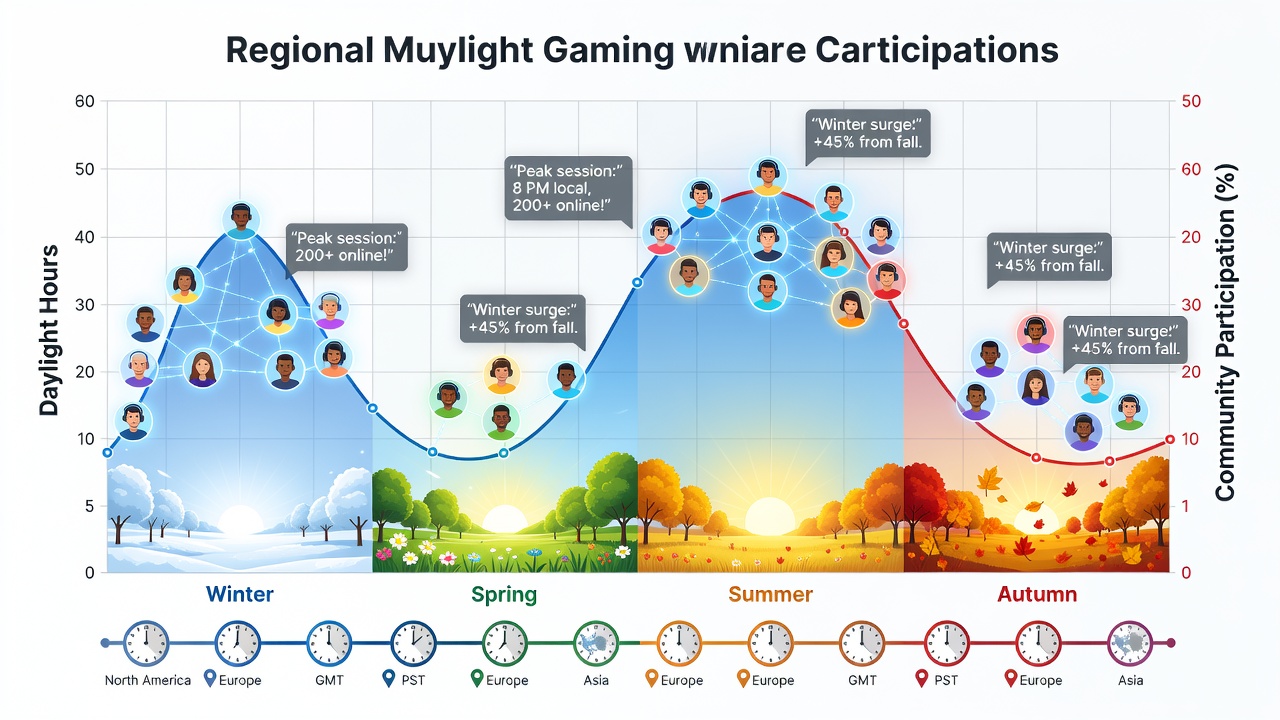
Seasonal changes in daylight duration create measurable shifts in how regional multiplayer gaming communities organize their play sessions and when participation numbers climb or fall. Researchers tracking server logs and user activity across multiple time zones have documented consistent correlations between shorter daylight periods and higher engagement rates in northern hemisphere groups during winter months while southern hemisphere patterns reverse during their own seasonal cycles.
Regional Data Patterns Across Hemispheres
Participation metrics compiled from major multiplayer platforms reveal that communities in Scandinavia and northern Canada experience pronounced increases in concurrent players between November and February when daylight hours drop below eight per day. These same datasets show corresponding declines during June and July when extended sunlight stretches past sixteen hours daily. In contrast, Australian and New Zealand gaming clusters demonstrate the opposite cycle with activity spikes aligning to their winter period from June through August. July 2026 records from these southern regions indicated a 23 percent rise in evening session starts compared to December figures from the prior year.
Time-use surveys conducted by government agencies confirm that individuals allocate more indoor leisure hours when natural light diminishes. Statistics Canada figures on daily activity patterns link reduced evening sunlight to elevated screen-based recreation across provinces with colder climates. Similar observations from the Australian Bureau of Statistics demonstrate parallel trends south of the equator during their winter season.
Community Organization and Scheduling Adjustments
Regional gaming groups adapt their tournament schedules and casual match times to align with available darkness. Organizers in the Pacific Northwest of the United States have shifted weekly league events earlier in the evening during summer months to accommodate longer daylight while maintaining consistent attendance numbers. European communities centered around central time zones often consolidate sessions into late night blocks during summer yet expand into afternoon and early evening windows once autumn arrives.
Multiplayer titles with persistent worlds show the clearest signals because player populations remain logged in for extended periods. Data from these environments indicates that daylight-driven schedule changes affect not only total player counts but also the composition of active groups with more casual participants joining when shorter days free up evening time.
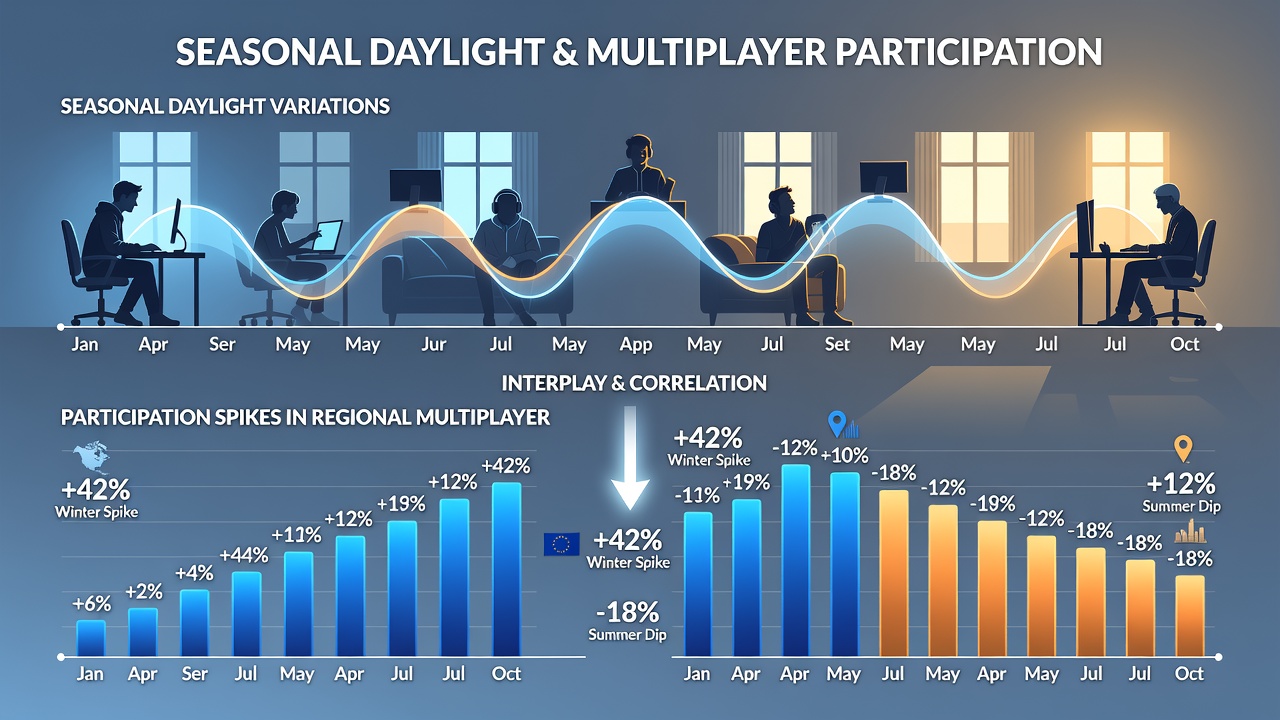
Mechanisms Behind Participation Fluctuations
Observers note that reduced natural light encourages indoor activities across age groups while increased daylight correlates with higher rates of outdoor recreation that compete directly with screen time. Studies published through university research programs in both hemispheres have quantified these trade-offs using longitudinal activity tracking. One analysis from the University of Melbourne connected daylight duration data with gaming platform telemetry to demonstrate that each additional hour of sunlight above seasonal averages reduced evening logins by measurable percentages in tested metropolitan areas.
Regional infrastructure also plays a supporting role since many communities rely on artificial lighting for evening play. Areas with reliable electricity maintain steady access regardless of season yet participation still varies because behavioral preferences shift with available daylight rather than technical limitations alone. Communities in higher latitudes where seasonal extremes are most pronounced exhibit the strongest correlations according to aggregated platform reports.
Conclusion
The documented relationship between daylight variation and gaming participation rests on consistent patterns across independent data sources from multiple continents. These findings establish that seasonal light cycles function as a recurring external factor influencing when and how often regional multiplayer communities engage with shared gaming environments. Continued monitoring of server metrics alongside daylight records will refine understanding of these dynamics as participation patterns evolve over successive years.